
Local Farm-Raised Chicken in Northern Michigan
In Northern Michigan, more people are looking for food that’s raised with care, tastes better, and reflects where it comes from. Local farm-raised chicken is part of that shift — away from anonymous supply chains and toward farms you can actually know.
At Driftwood Pastures, we raise pasture-raised chicken here in Antrim County, using practices that prioritize animal welfare, healthy land, and honest food. This page explains what “local farm-raised chicken” really means, why it’s different, and what to expect when buying directly from a Michigan farm.
What Does “Local Farm-Raised Chicken” Mean?
“Farm-raised” can mean very different things depending on who’s using the term.
For us, local farm-raised chicken means:
Chickens raised on a small farm, not in an industrial facility
Time spent outdoors on pasture, not confined indoors
Daily care by the people who raise them
Processing done in inspected facilities
Food sold directly to local families and communities
Local matters because it shortens the distance between farmer and customer. It allows for transparency, accountability, and food that reflects the place it was raised.
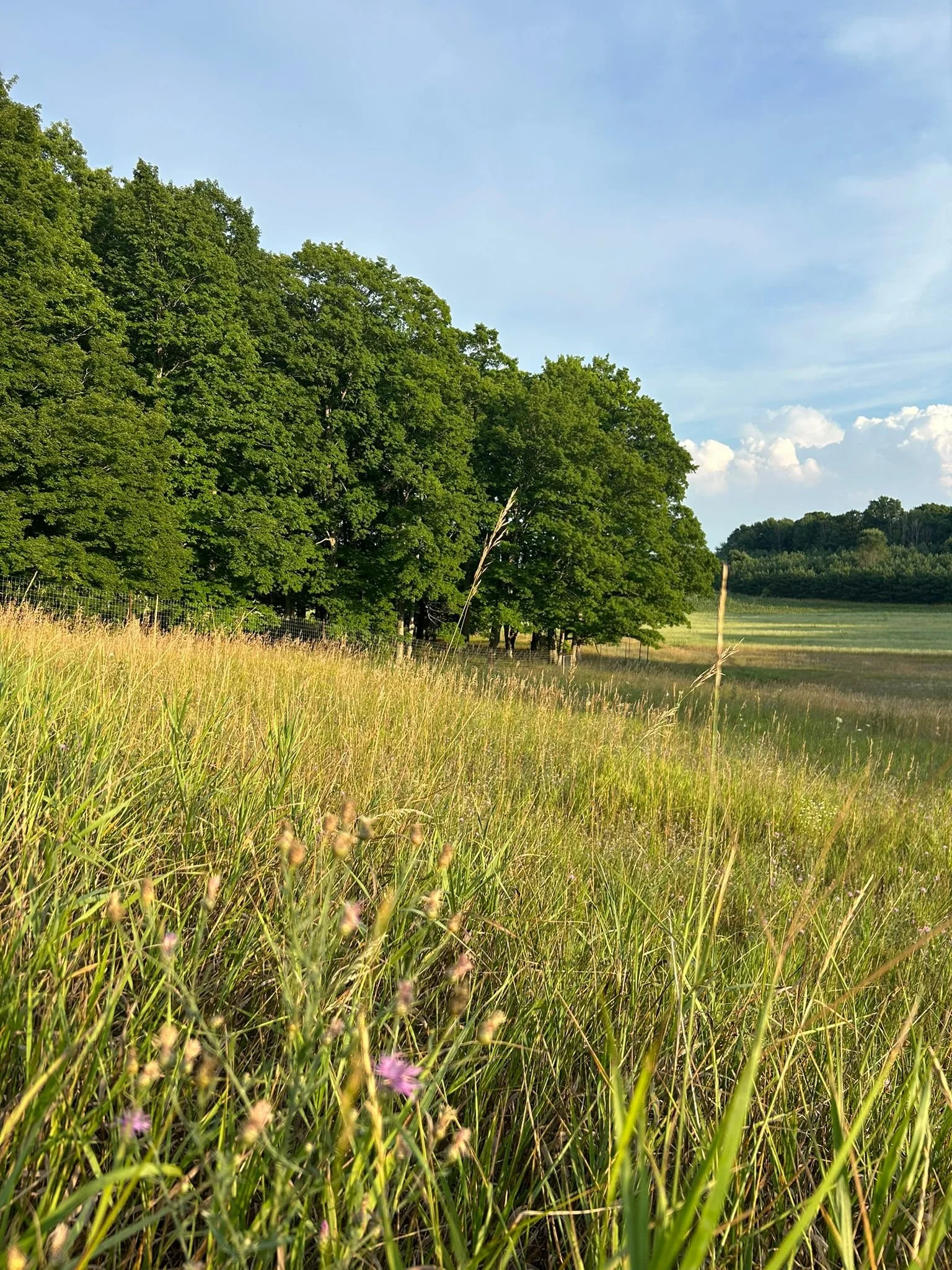
How Farm-Raised Chicken Is Different From Grocery Store Chicken
Most grocery store chicken comes from large-scale systems designed for speed and uniformity. Local farm-raised chicken is slower by design.
Common differences include:
Texture & flavor: Pasture-raised chicken tends to be leaner and more flavorful
Animal welfare: Birds spend time outdoors and are able to move naturally
Scale: Small batches allow for daily observation and hands-on care
Freshness: Shorter supply chains mean less time in transit and storage
These differences don’t make farm-raised chicken “better” for everyone — but they do matter to people who value quality, transparency, and local food systems.
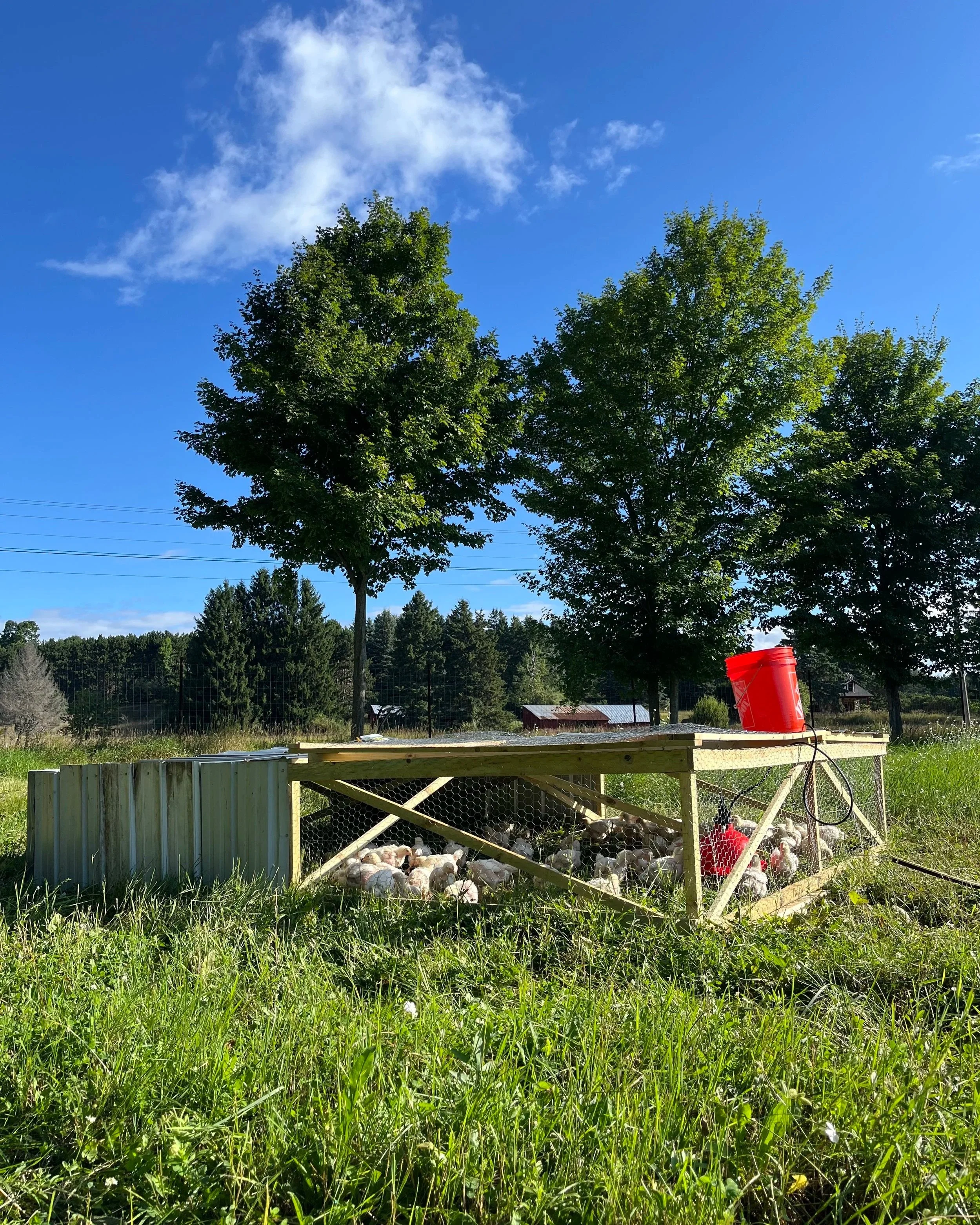

Why Local Chicken Matters in Northern Michigan
Northern Michigan presents unique challenges and opportunities for raising food:
A short growing season
Variable weather
Diverse pasture grasses
Strong local food culture
Raising chicken on pasture here requires careful timing, daily attention, and flexibility. When you buy local farm-raised chicken, you’re supporting farming practices adapted to this region — not a one-size-fits-all model.
You’re also keeping food dollars circulating locally and helping preserve small farms as part of the northern Michigan landscape.
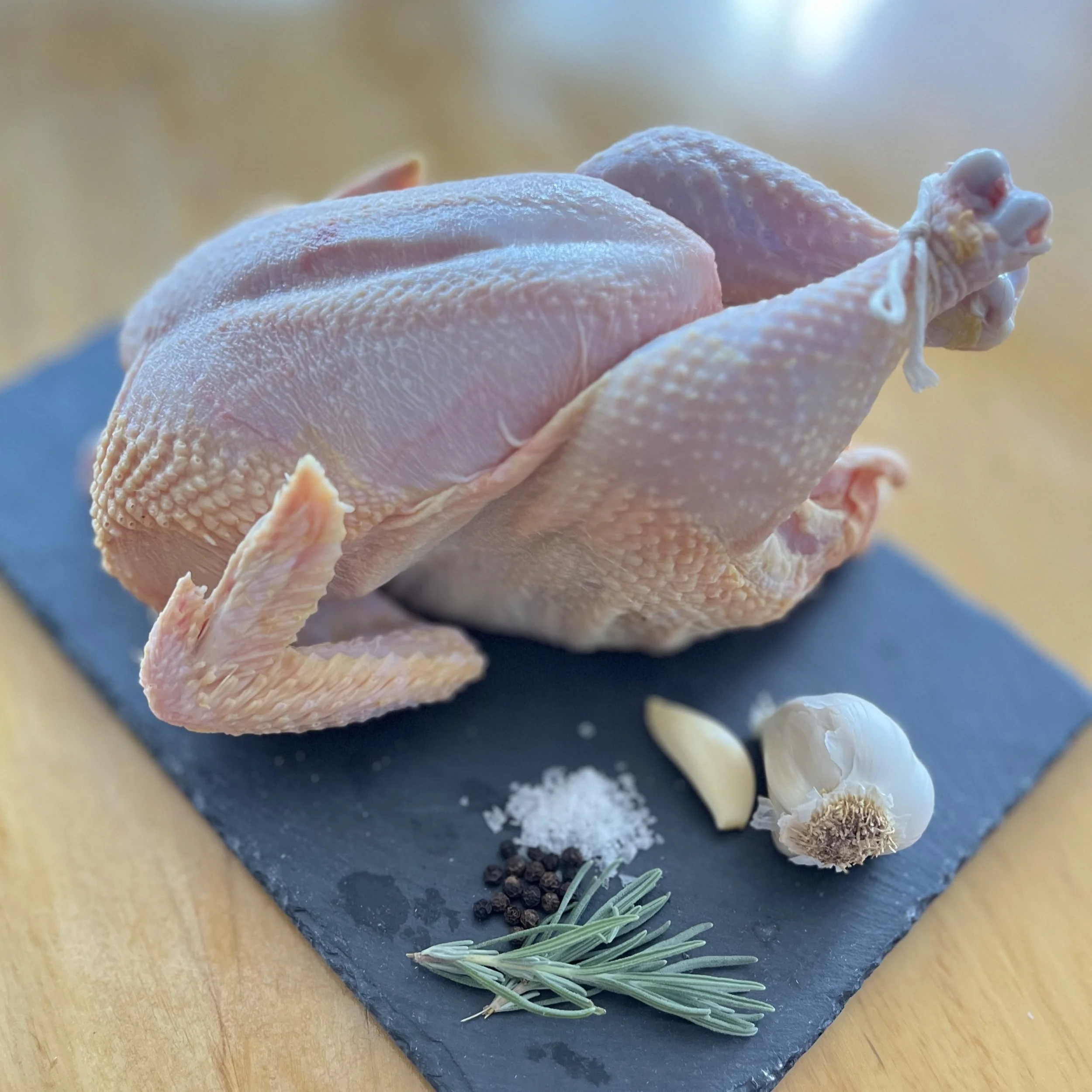
What to Expect When Buying Chicken Directly From a Farm
If you’re new to buying local chicken, a few things may be different from what you’re used to:
Portions may vary slightly in size
Availability is seasonal
Quantities are limited
The chicken may cook a bit faster due to leanness
Many customers find that once they adjust, they prefer the flavor, texture, and connection that comes with buying directly from a farm.
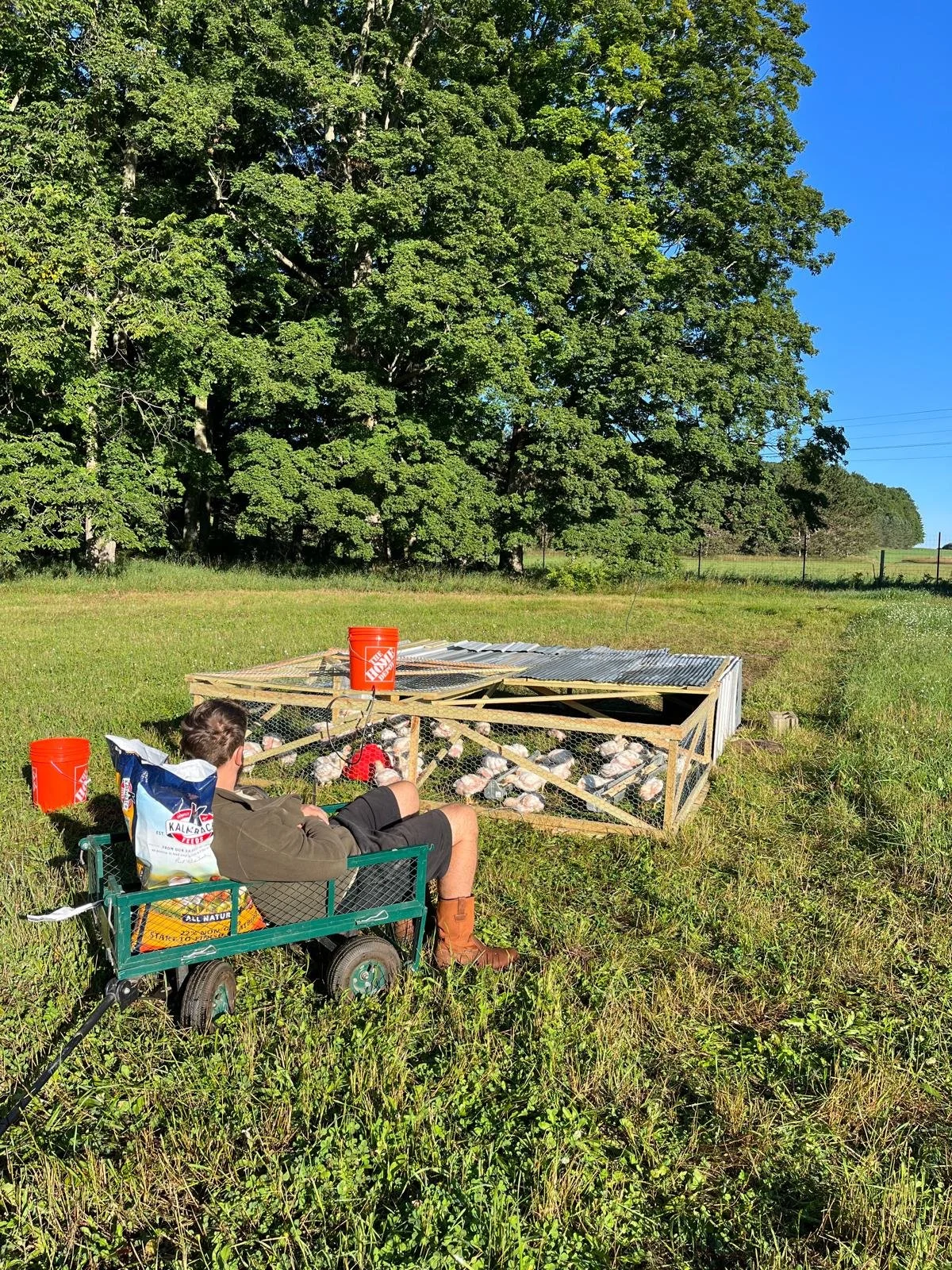
Choosing a Local Farm You Trust
When looking for local farm-raised chicken, it’s worth asking:
How are the chickens raised?
Do they spend time on pasture?
Where is processing done?
Can I learn about the farm and its practices?
A good farm will welcome these questions and answer them clearly.
Our Approach at Driftwood Pastures
At Driftwood Pastures Co., we raise pasture-raised chicken on open fields in Bellaire, Michigan. Our birds are moved regularly to fresh pasture, cared for daily, and raised at a pace that supports animal health and land stewardship.
We believe good food starts with:
Respect for the animals
Care for the land
Transparency with our customers

Where to Buy Local Farm-Raised Chicken in Northern Michigan
Local farm-raised chicken is often available through:
Direct farm sales
Farmers markets
CSA programs
Local buying clubs
At Driftwood Pastures Co., we offer online ordering with local delivery and market pickup options throughout the Bellaire and Torch Lake area.
Frequently Asked Questions
-
Not necessarily. Organic refers to feed and certification standards, while farm-raised describes how and where chickens are raised.
-
Many people choose pasture-raised chicken for its leanness, flavor, and how it’s raised, though nutritional differences can vary.
-
Smaller scale, slower growth, and hands-on care all factor into pricing. Local chicken reflects the real cost of raising food responsibly.